
How to Choose the Right Stainless Steel Coil Surface Finish: A Buyer’s Guide
How to Choose the Right Stainless Steel Coil Surface Finish: A Buyer’s Guide
When purchasing stainless steel coil, material grade is only one part of the specification. Surface finish can be equally important, especially for architectural, decorative, kitchen, appliance, fabrication, and visible stainless steel applications.
Terms such as 2B, BA, No.4, Hairline, and Mirror finish are commonly used in stainless steel purchasing. However, these finishes are not simply different appearances. They can affect visual quality, fabrication requirements, cleaning, handling, and final product performance.
For international buyers, choosing the correct stainless steel surface finish before ordering can help avoid unnecessary reprocessing costs and quality disputes.
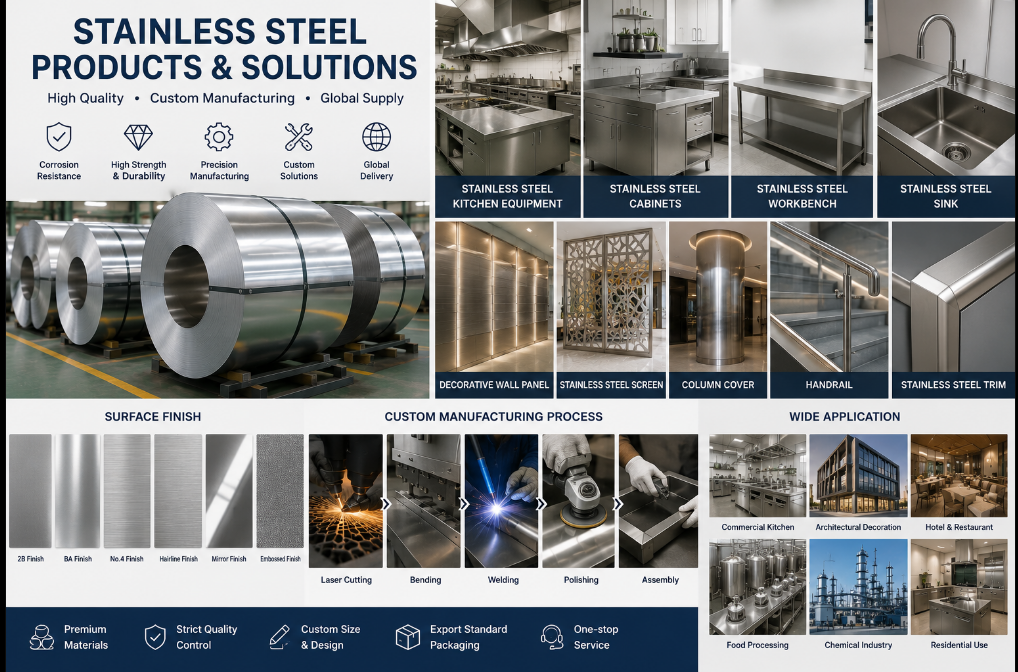
What Is Stainless Steel Surface Finish?
Stainless steel surface finish describes the condition and appearance of the material surface after manufacturing and processing.
The final surface can be influenced by:
Rolling process
Heat treatment
Pickling
Skin-pass processing
Grinding
Brushing
Polishing
Protective film application
The required finish should therefore be specified clearly when requesting a quotation.
A buyer who simply asks for “304 stainless steel coil” may receive a quotation without enough information to determine the exact surface requirements.
Common Stainless Steel Coil Surface Finishes
The most commonly requested finishes include:
2B
BA
No.4
Hairline
Mirror
Other customized decorative finishes
The appropriate choice depends on the final application.
2B Stainless Steel Finish
2B is one of the most widely used finishes for cold rolled stainless steel.
It generally provides a smooth, relatively uniform surface with a low-reflective appearance.
2B stainless steel coil is widely used for:
Kitchen equipment
Food processing equipment
Industrial fabrication
Tanks
Appliances
General sheet metal fabrication
Construction components
For buyers who need a functional surface rather than a highly decorative appearance, 2B can be an efficient choice.
However, the exact appearance and surface requirements should still be confirmed with the supplier because production conditions and applicable standards can affect the final surface.
BA Stainless Steel Finish
BA stands for Bright Annealed.
Bright annealing is a heat-treatment process carried out under controlled conditions to help maintain a bright surface.
BA stainless steel is commonly selected when a brighter and more reflective appearance is required.
Typical applications include:
Kitchen appliances
Decorative components
Automotive components
Interior applications
Elevator components
Architectural products
BA is often chosen when appearance is more important than the standard functional appearance of 2B.
No.4 Stainless Steel Finish
No.4 is a commonly used brushed stainless steel finish.
The surface has a directional brushed appearance created through abrasive processing.
It is widely used in:
Kitchen equipment
Elevator panels
Architectural decoration
Commercial interiors
Stainless steel doors
Furniture
Wall panels
Food-service equipment
One advantage of a brushed surface is that it can provide a consistent decorative appearance while being less reflective than a mirror-polished surface.
When ordering No.4 stainless steel, buyers should pay attention to the consistency of the brushing direction and surface appearance.
Hairline Stainless Steel Finish
Hairline stainless steel has a finer and more continuous linear appearance than many conventional brushed finishes.
It is particularly popular in architectural and decorative applications.
Common uses include:
Stainless steel doors
Elevator panels
Wall cladding
Hotel interiors
Commercial buildings
Decorative furniture
Architectural metalwork
For visible projects, buyers should clearly communicate the desired hairline direction and visual standard.
If the stainless steel will be installed as multiple panels, consistency between batches becomes especially important.
Mirror Stainless Steel Finish
Mirror stainless steel is highly polished to produce a strong reflective appearance.
It is commonly used for decorative applications where visual impact is important.
Typical applications include:
Interior decoration
Hotel decoration
Retail environments
Elevator decoration
Architectural features
Decorative wall panels
Furniture
Because mirror surfaces are highly reflective, scratches, fingerprints, handling marks, and surface contamination may be more visible.
For this reason, packaging and protective film requirements should be discussed before shipment.
How to Choose Between 2B, BA, No.4, Hairline, and Mirror
The correct surface depends on the final product.
| Surface Finish | Typical Appearance | Common Applications |
|---|---|---|
| 2B | Smooth, low-reflective | Industrial, kitchen, fabrication |
| BA | Bright and reflective | Appliances, decoration |
| No.4 | Brushed directional | Kitchen, architecture, interiors |
| Hairline | Fine linear appearance | Doors, elevators, decoration |
| Mirror | Highly reflective | Premium decoration, interiors |
The table is only a general purchasing reference. The actual finish specification should be confirmed according to the applicable material standard, supplier capability, samples, and final application.
Should Buyers Request a Surface Sample?
For decorative projects, yes.
A written finish description cannot always communicate the exact visual result that a buyer expects.
A sample can help confirm:
Surface brightness
Brushing direction
Roughness or visual texture
Reflection
Color consistency
Protective film
Overall appearance
This is particularly useful when the stainless steel will be directly visible after installation.
For large projects, buyers may also consider approving a physical sample before mass production.
Surface Finish and Stainless Steel Grade Are Different Specifications
A common purchasing mistake is treating the grade and surface finish as the same thing.
For example:
304 + 2B
and
304 + No.4
are both 304 stainless steel, but they have different surface conditions and intended applications.
Similarly:
316 + 2B
and
316 + Mirror
have the same basic material grade but very different surface requirements.
Therefore, an RFQ should specify both the material grade and the surface finish.
Does Surface Finish Affect Price?
Yes.
Processing requirements can influence the final price.
A basic cold rolled finish may require less additional surface processing than a decorative finish involving grinding, brushing, polishing, or other treatment.
The final price may also depend on:
Stainless steel grade
Thickness
Width
Order quantity
Surface finish
Processing requirements
Protective film
Packaging
Delivery destination
For this reason, buyers should compare quotations only after confirming that suppliers are offering the same specification.
Surface Finish and Protective Film
For decorative stainless steel products, protective film can be important during transportation, fabrication, and installation.
It can help reduce the risk of surface damage caused by:
Handling
Cutting
Bending
Transportation
Installation
Contact with other metal components
However, the type and suitability of protective film depend on the manufacturing and downstream processing requirements.
Buyers should communicate whether the material will be laser cut, bent, fabricated, welded, or processed after delivery.
Surface Finish for Stainless Steel Doors and Architectural Products
For architectural applications, surface appearance often becomes a major purchasing consideration.
For example:
2B: more suitable for functional or concealed components
No.4: suitable for common brushed architectural surfaces
Hairline: suitable when a finer linear appearance is required
Mirror: suitable for highly reflective decorative surfaces
BA: suitable when a bright surface is desired
The correct choice depends on the architectural design, lighting conditions, cleaning requirements, and desired appearance.
For projects involving multiple panels or batches, buyers should also consider color and finish consistency.
How to Write Surface Finish Requirements in an RFQ
A clear RFQ can reduce unnecessary communication and quotation errors.
Instead of writing:
304 stainless steel coil, 1.0 mm
a more complete request could include:
Grade: 304
Thickness: 1.0 mm
Width: 1219 mm
Surface: 2B / No.4 / Hairline
Quantity: 20 MT
Standard: ASTM or specified applicable standard
Protective film: Required / Not required
Application: Architectural fabrication
Destination: [Port / Country]
This gives the supplier enough information to prepare a more meaningful quotation.
How FSGOOD STEEL Helps Buyers Select the Right Finish
Selecting the correct surface finish is easier when the supplier understands the buyer's final application.
When requesting stainless steel coil, buyers can provide the intended application together with the required grade, thickness, width, finish, quantity, and destination.
This allows the supplier to recommend a suitable material configuration and clarify production, packaging, and processing requirements before the order is confirmed.
Frequently Asked Questions
What is the most common stainless steel finish?
2B is one of the most widely used finishes for cold rolled stainless steel, while No.4 and other brushed finishes are common in visible architectural and equipment applications.
Is BA stainless steel better than 2B?
Not necessarily. They serve different purposes. BA provides a brighter appearance, while 2B is widely used for functional and general fabrication applications.
What is No.4 stainless steel?
No.4 is a brushed stainless steel finish with a directional surface appearance, commonly used in architectural, kitchen, elevator, and interior applications.
Is Hairline stainless steel the same as No.4?
They are both linear/brushed finishes, but the exact appearance and processing can differ. Buyers should confirm the required surface through supplier specifications or approved samples.
Which stainless steel finish is best for doors?
No.4 and Hairline are common choices for stainless steel doors because they provide a directional decorative appearance. The best option depends on the design and required visual effect.
Should I specify surface finish when buying stainless steel coil?
Yes. If the surface is important to the final application, it should be clearly specified in the RFQ together with grade, thickness, width, standard, quantity, and other requirements.
Final Thoughts
Choosing the right stainless steel surface finish is an important part of professional material sourcing.
The correct finish depends on more than appearance. Buyers should consider the final application, fabrication process, cleaning requirements, visual expectations, protective film, and overall project budget.
By clearly specifying the required finish and confirming samples when necessary, international buyers can reduce the risk of receiving material that technically meets the grade requirement but does not meet the visual requirements of the final product.
For stainless steel procurement, a complete specification should define grade + thickness + width + surface finish + standard + quantity + packaging requirements before production begins.
📞 Contact FSGood Steel immediately to obtain a quote or technical consultation:
📧 Email – [sales@fsgoodsteel.com]
📱 Phone – [+86 18370137709]
💬 WhatsApp - [+86 18007093101]
🌐Website – www.fsgoodsteel.com