
ASTM, EN, and JIS Stainless Steel Standards: What International Buyers Need to Know
ASTM, EN, and JIS Stainless Steel Standards: What International Buyers Need to Know
When purchasing stainless steel coils or sheets from an overseas supplier, buyers often encounter different standards such as ASTM, EN, and JIS.
For experienced procurement teams, these standards are an important part of the purchasing specification. For new importers, however, the differences can sometimes be confusing.
Understanding stainless steel standards before placing an order can help buyers communicate more accurately with suppliers, compare quotations correctly, and reduce the risk of receiving materials that do not meet project requirements.
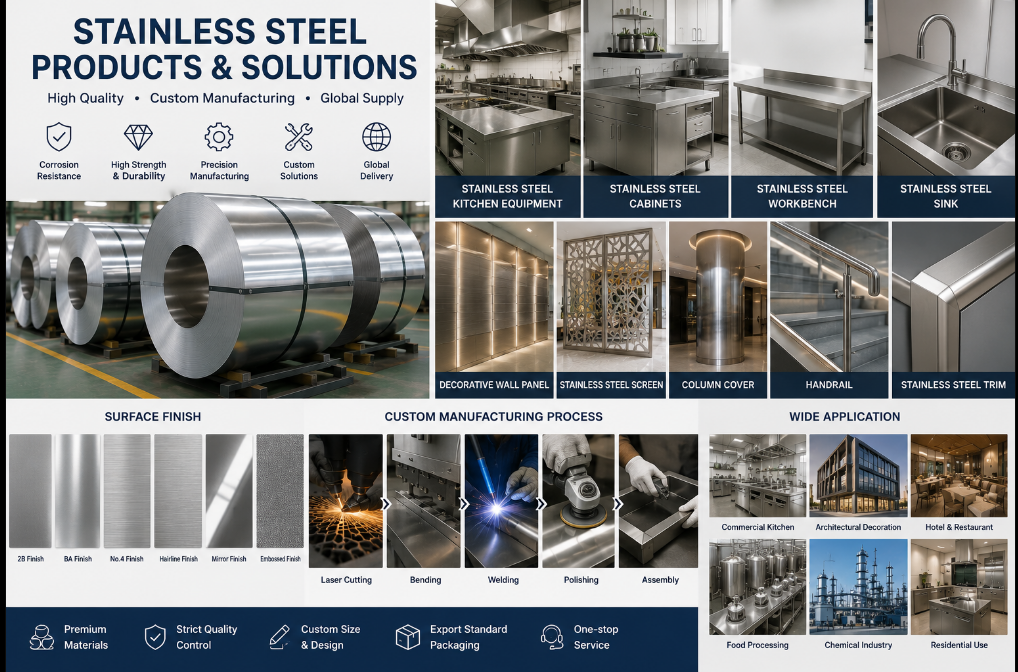
What Are Stainless Steel Standards?
Stainless steel standards provide technical requirements for materials, including aspects such as:
Chemical composition
Mechanical properties
Dimensions and tolerances
Testing requirements
Surface conditions
Product forms
Different countries and regions may use different standards.
The most commonly encountered systems in international stainless steel purchasing include ASTM, EN, and JIS.
What Is the ASTM Standard?
ASTM standards are widely used in North America and international industrial projects.
For stainless steel sheet and plate products, buyers may commonly encounter specifications such as ASTM A240.
ASTM standards are frequently referenced in:
Construction projects
Industrial equipment
Food processing
Chemical processing
Engineering projects
When a project specification requires ASTM compliance, buyers should clearly communicate the required standard to the supplier before production.
What Is the EN Standard?
EN stands for European Standard.
EN standards are widely used across European markets and many international projects that follow European technical specifications.
For stainless steel products, buyers may encounter standards within the EN 10088 series.
European buyers may specify requirements involving:
Material grade
Product dimensions
Mechanical properties
Chemical composition
Surface finish
Testing requirements
If your customer or project specification is based on European standards, it is important to confirm the applicable EN standard before ordering.
What Is the JIS Standard?
JIS stands for Japanese Industrial Standards.
JIS standards are commonly used in Japan and throughout parts of Asia.
For stainless steel products, buyers may encounter standards such as JIS G4304 and other related specifications depending on the product form and application.
JIS specifications may be particularly relevant to:
Asian manufacturing projects
Automotive applications
Industrial equipment
Precision fabrication
Engineering projects
ASTM vs EN vs JIS: Are They the Same?
Not necessarily.
A stainless steel grade such as 304 may have corresponding designations in different standards, but buyers should not automatically assume that different standards are completely interchangeable.
Differences may exist in:
Chemical composition limits
Mechanical requirements
Testing procedures
Dimensional tolerances
Product classification
Surface requirements
Therefore, simply telling a supplier "I need 304 stainless steel" may not provide enough information for a project with strict technical requirements.
Why Buyers Should Specify the Standard
Imagine a buyer sends a supplier the following inquiry:
"Please quote 304 stainless steel coil."
The supplier may still need to clarify:
Which standard?
What thickness?
What width?
Which surface finish?
What edge condition?
What quantity?
What packaging?
What inspection requirements?
A more complete inquiry could specify:
Grade: 304
Product: Stainless Steel Coil
Finish: 2B
Thickness: Required thickness
Width: Required width
Standard: Applicable ASTM / EN / JIS specification
Quantity: Required quantity
This creates a much clearer basis for quotation and production.
Don't Compare Quotations Based on Price Alone
Different standards and specifications can affect the purchasing cost.
When comparing quotations from different suppliers, buyers should make sure that the products being compared have equivalent:
Grades
Standards
Dimensions
Surface finishes
Tolerances
Quality requirements
Packaging specifications
Otherwise, a lower quotation may not represent a genuinely lower cost for equivalent material.
Standards and Material Test Certificates
For international orders, documentation is also important.
Depending on the order and agreed requirements, buyers may request a Mill Test Certificate (MTC) or other quality documentation.
The documentation can help buyers verify information such as:
Material grade
Chemical composition
Mechanical properties
Product specifications
Heat or batch information
For projects with strict quality requirements, buyers should agree on documentation requirements before production.
A Practical Checklist for International Buyers
Before ordering stainless steel coils, confirm these specifications with your supplier:
Material
Stainless steel grade
Product form
Required standard
Dimensions
Thickness
Width
Coil weight
Inner diameter
Surface
2B
BA
No.4
Hairline
Other specified finish
Quality
Thickness tolerance
Width tolerance
Inspection requirements
MTC requirements
Logistics
Packaging method
Container requirements
Delivery destination
Shipping schedule
The clearer the specification, the easier it is to achieve consistent results.
Why Choose FSGOOD STEEL?
FSGOOD STEEL supplies stainless steel coils and sheets for international customers across construction, manufacturing, food processing, architectural decoration, and industrial applications.
Our product range includes:
✔ 201 Stainless Steel Coil
✔ 304 Stainless Steel Coil
✔ 316 Stainless Steel Coil
✔ Cold Rolled Stainless Steel Coil
✔ 2B, BA, and No.4 Finishes
✔ Customized Widths and Thicknesses
✔ Export Packaging
✔ Pre-Shipment Quality Inspection
Our team works with customers to confirm product specifications before production, helping reduce communication errors and procurement risks.
The Importance of Clear Technical Communication
International stainless steel purchasing involves more than simply finding a supplier with a competitive price.
A successful order begins with a clear technical specification.
When buyers clearly communicate the required grade, standard, dimensions, surface finish, tolerance, inspection, and packaging requirements, suppliers can provide more accurate quotations and more consistent products.
Conclusion
ASTM, EN, and JIS are important standards that international buyers may encounter when sourcing stainless steel products.
The key point is simple: do not specify stainless steel only by grade.
For professional procurement, the grade, standard, dimensions, surface finish, tolerances, inspection requirements, and packaging should all be clearly confirmed before production.
If you are sourcing stainless steel coils from China and need help selecting the appropriate specifications, FSGOOD STEEL can provide product information, technical support, and competitive quotations for your project.
Contact our team to discuss your stainless steel requirements.
📞 Contact FSGood Steel immediately to obtain a quote or technical consultation:
📧 Email – [sales@fsgoodsteel.com]
📱 Phone – [+86 18370137709]
💬 WhatsApp - [+86 18007093101]
🌐Website – www.fsgoodsteel.com